

On the Sedona, Arizona Hikes
Plus, a couple of restaurants to try along the way.

Labeling itself both the “Day Hiking Capital of the World” and the place to “golf in the Grand Canyon,” Sedona is a town that stands at the nexus of contradictions. Here you will find hikers and golfers standing shoulder-to-shoulder with hippies, and tourists outnumber locals three-hundred to one.
The town didn’t incorporate until 1988, after seeing an influx of neo-hippies who, presumably, were pilgrimaging to Sedona’s many vortexes – more about those below. As the town grew, it became increasingly known for its hiking, with more than 200 trails spanning 300+ miles of terrain. During its high seasons – March through May and September through November – almost three million tourists visit the town. Calling the actual town of Sedona serene would be an overstatement, but you can easily find some solitude out in the red rocks if you stay away from trails like Devil’s Bridge1.
We aren’t much into golf here at the Digest, but we quite enjoy a good hike – and a good restaurant. Here are a couple of treks and eateries we vetted during a recent Sedona fact-finding mission.

Soldier Pass Trail:
4.8 miles long with a 823 ft gain – out and back. More on AllTrails.
There is a handful of “must-try” hikes in Sedona, and one of them is Soldier Pass. This is the type of trail where parking lots fill up early, and you’ll likely have to take a shuttle to get to the trailhead. Alternatively, you can hike an extra mile from a remote lot.
Crowded as it is, Soldier Pass is a bit more strenuous than the popularity would suggest. When the sun hits, the gradual incline starts feeling particularly steep – I clocked it at 39% toward the end.
Those are minor caveats, and it is still a very worthy trek, with sights like the Devil’s Kitchen Sinkhole and some amazing views from Soldier Pass Cave. The colors are a mix of Martian reds and a unique green-and-blue-hued flora.
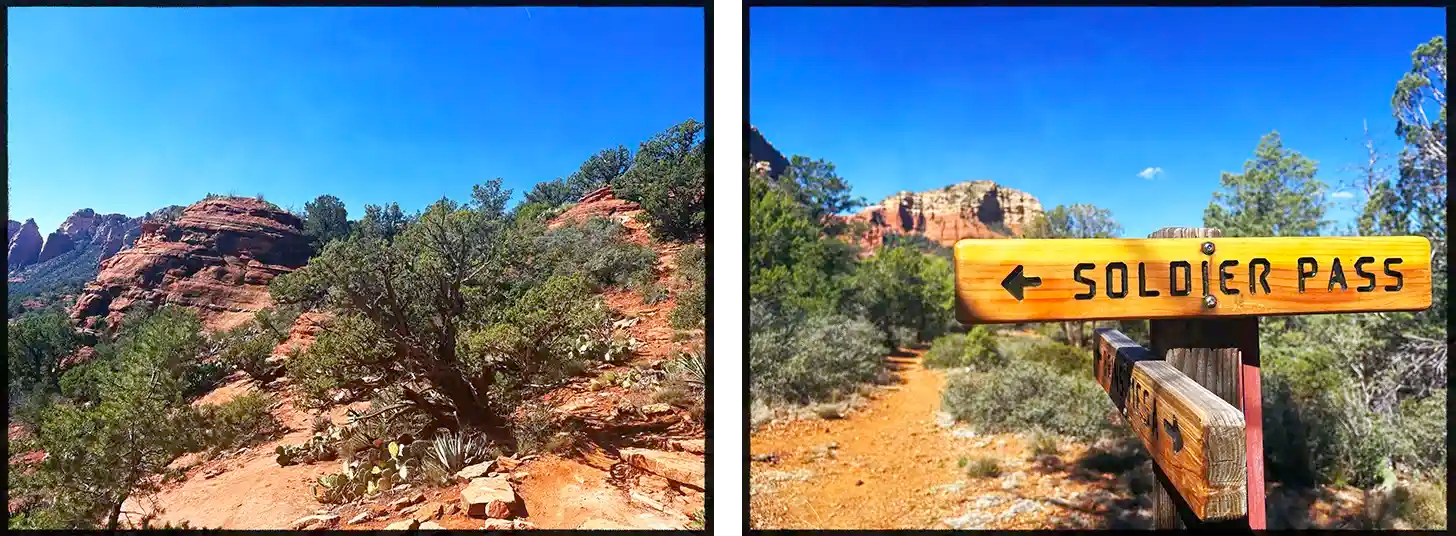
Soldier Pass is not a loop, but rather an out-and-back hike – one that is more varied than you might expect. You will see a whole lot more on the way down than on the way up. Additionally, you can tack on the Brins Mesa Trail on top of the pass. That one measures in as a healthy four-mile addition.
As for Soldier’s Pass itself – or any trail – come equipped with plenty of water and a first-aid kit. We witnessed an unprepared hiker with cactus needles in their hand, and it looked painful. (They also refused to accept help from passers-by – seriously, don’t let pride get in the way of your wellbeing.) And, speaking of essentials…

The Ten Essentials’ Three Companions.
You may know the “Ten Essentials” – the basic list of equipment to bring on a hike – but there are a few additions you should consider to make your treks more bearable:
Gummy Bears: On a longer hike, you’ll want to microdose on energy, and gummy candies bring a quick, sugary boost. Be it the Haribo original or one of the many artisanal alternatives, they will both keep you going and – importantly – reduce grumpiness. The latter stands to benefit everyone.
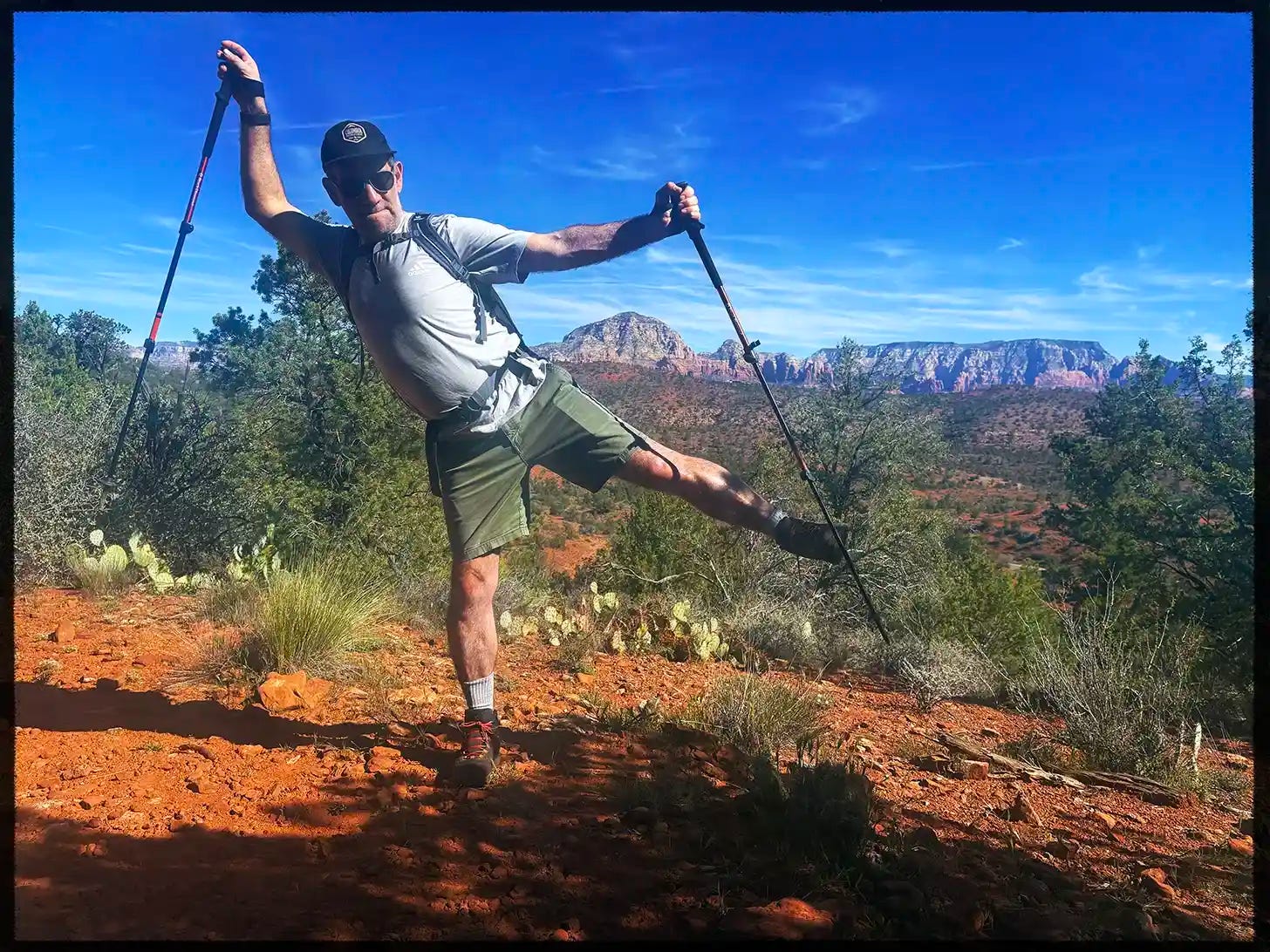
Hiking Poles: Unfairly stereotyped as the mature person’s accessory, hiking poles don’t just provide good knee support; they give you an extra oomph while traversing bumpier trails. When you cross a stream, they help you balance while wading over rocks and logs, too. Poles don’t slow you down – they let you move faster.
AllTrails: There aren’t many apps I swear by, but AllTrails is one any hiker should consider. Not only is it a database of practically all trails in the US and beyond, but it also includes the information you need to properly plan your trek. And, as you get walking, the map is a lifesaver – it quickly alerted us when we took a wrong turn on “Oak Creek Trail.” The Apple Watch integration works well, too.

The Energy Center of a Vortex
Sedona is well known for its vortexes – sites with highly concentrated energy that bring inner peace, inspiration, and healing. Apparently, the town itself is one giant vortex, but there are four hyper-concentrated conduits: Airport Mesa, Cathedral Rock, Bell Rock, and Boynton Canyon.
You can’t actually see these vortexes, but if I were a betting man, I would say the one at Airport Mesa was right about here:
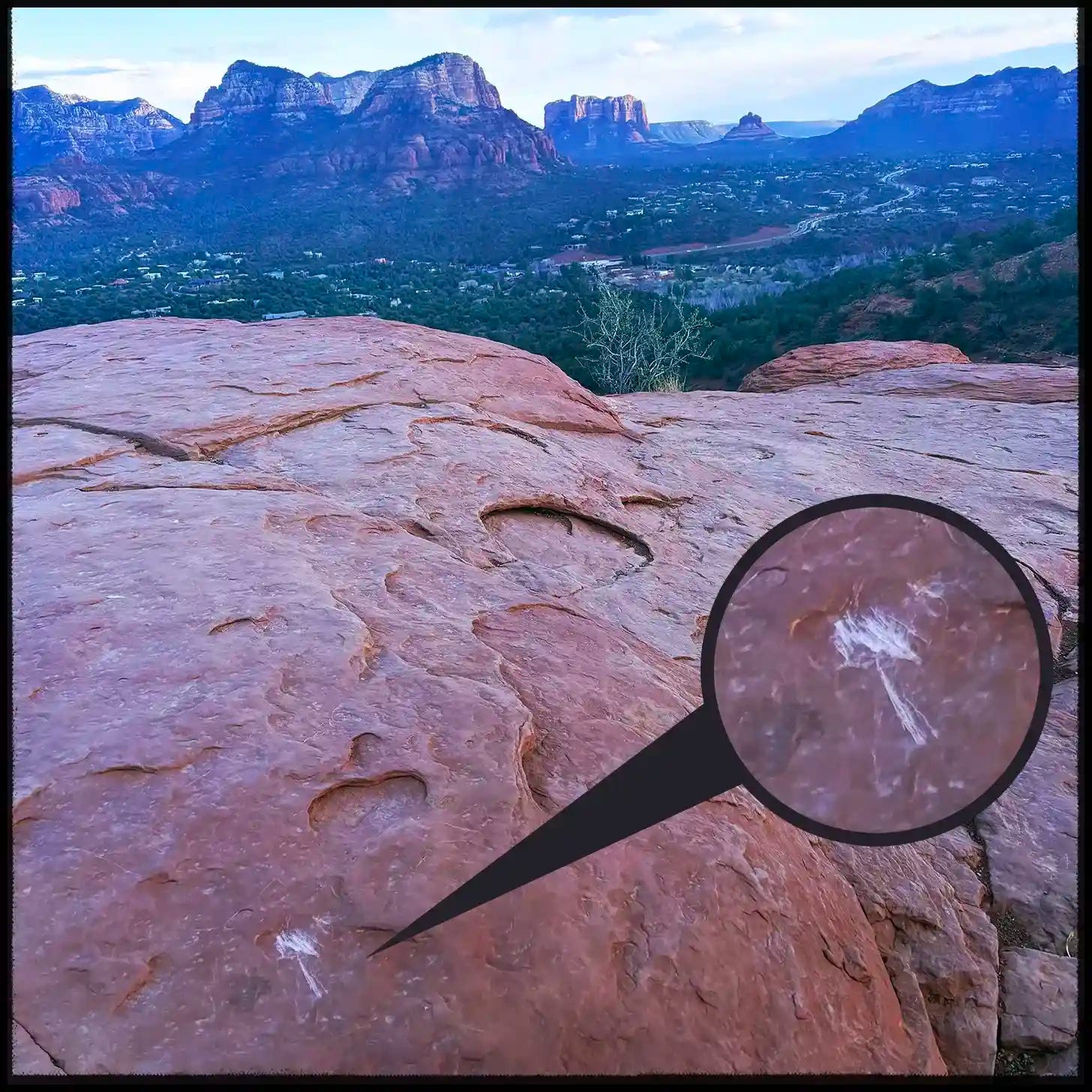
There is no scientific proof that vortices are real, but as there is no proof they’re not, either, you should make up your own mind. What I can say is that the smooth Airport Mesa rock felt soothing on my bare feet, and the view was magnificent. In that sense, even the most hardened of cynics will find something to enjoy at a vortex.
Visit Sedona has more information on the (alleged) phenomenon.

Pyramid-to-Scorpion Trail Loop:
2.2 miles long with a 288 ft gain. More on AllTrails.
I’m not sure if there’s such a thing as a secret trail in Sedona, but the Pyramid-to-Scorpion Loop is less crowded than many others and is also quite tranquil. You maintain a view of Cathedral Rock – the home of another vortex – for the majority of the trek, and there’s a short detour you can take for a better vantage point.
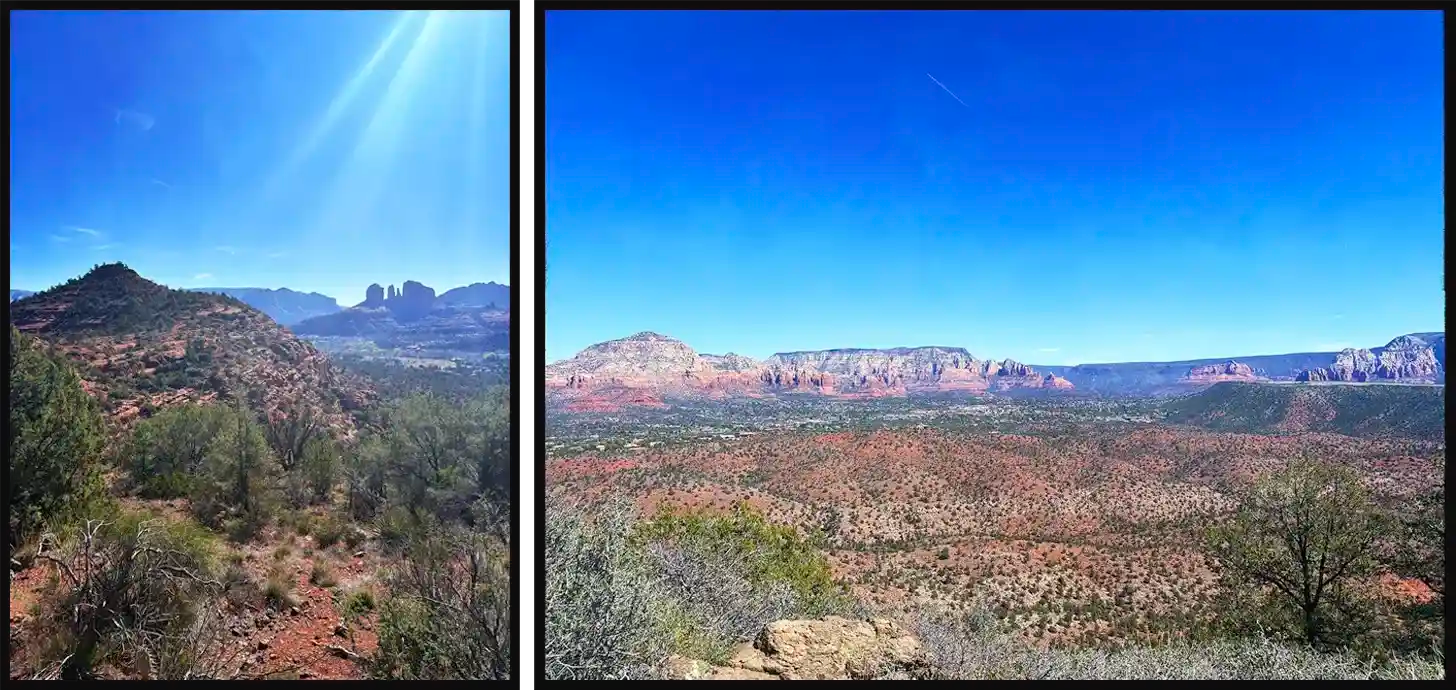
This was the easiest trail we tried, and walking it counterclockwise makes for a painless-ish climb. Keep an eye out for Junipers and prickly-pear cacti – I wouldn’t go as far as to say the flora is overly different from many other Sedona trails, but here you get a closer look at them.
The parking lot is tiny, but we had no trouble finding a spot late in the morning. Further into the high season, you probably want to get there earlier.
… and Schuerman Mountain Lookout:
1.8 miles long with a 367 ft gain – out and back. More on AllTrails.
The Schuerman trail is connected to the Pyramid-to-Scorpion loop, so you can easily go from one to the other. We chose to drive between the two because of the rapidly increasing temperature – it’s just a mile up the road. It’s worth noting that you likely will be mapped to a high-school parking lot where you, not surprisingly, are not allowed to park. Instead, look across the road and you’ll find a couple of spaces.
Now, a three-hundred-and-sixty-seven-foot gain might not sound too bad, but the consistent climb is deceivingly hard when the sun beats down. It’s not overly difficult in and of itself, just very sweaty, and the gummy bears come in handy.
The trek is more than worth it when you arrive at a pastoral lookout of West Sedona. This trail was relatively empty during our visit, allowing for a peaceful rest at the top of the hill.

Elote Café
Having been featured in publications like The Chicago Tribune and Fodor’s, Elote has garnered more attention than many Sedona restaurants, and well deserved so.
Particularly their eponymous elote is a must-try appetizer – the corn is served off the cob, drenched in a smoky mayo and paired with juicy limes. The spice-and-zest combination suits the Sedona climate.
Personally, I found the sweet corn bisque even better, and the truffle particularly added a good, earthy contrast to the sweetness. That the server suggested we skip the salad and instead order a full bowl of soup says a lot about its quality.

Add the brisket enchiladas – smoked for thirteen hours – as a main, and you get yourself quite the decent meal. I’d wholeheartedly go back.
It’s a popular spot, Elote. We managed to sneak in a spot at the community table, but reservations are generally required, so plan ahead.
Visit: 350 Jordan Rd • Web

Oak Creek Trail #108:
6.6 miles long with a 574 ft gain – out and back. $4 per person. More on AllTrails.
The 15-mile Oak Creek Canyon Scenic Drive from Sedona to Flagstaff comes recommended, as does the Oak Creek Trail #108 hike. Unless you get to the lot early, you likely will have to park alongside Highway 89A – a somewhat treacherous proposition, but hey… Live dangerously.
The main part of the hike has only a very gradual incline, and the thirteen stream crossings are the trickiest part. My best advice is not to go Frogger on it, but rather scope out the most logical rocks and logs to skip across. Poles are helpful here – we saw multiple people slip and step into the (shallow) ice-cold water, and it looked miserable.
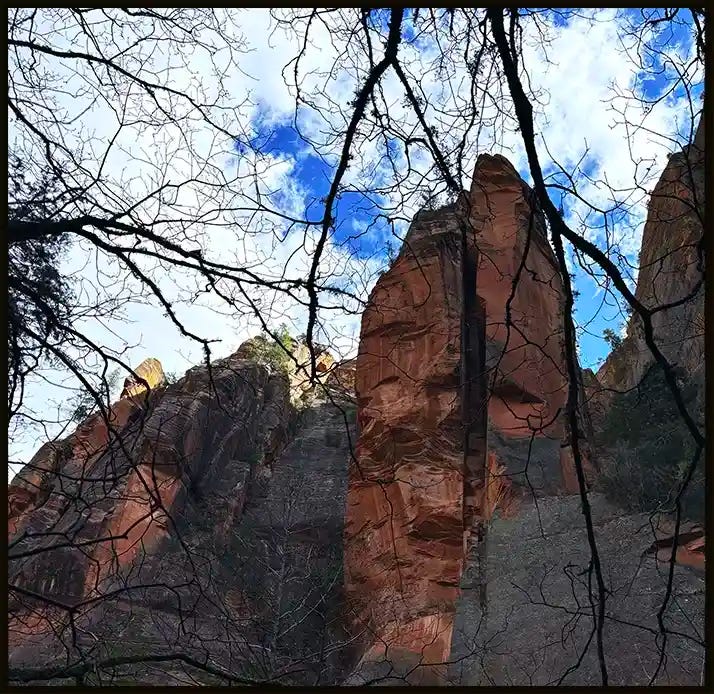
There’s a decent shading from the trees along the way, so the trek feels a lot more doable than those further south. No scorching sun beating against the red rocks here.
To complement the drive and trail, you might want to check out Indian Gardens, a nice little restaurant and market. All their breads and pastries are freshly baked, and the flavors are suitably clean.

Teacup Trail to Coffeepot Rock
2.6 miles long with a 269 ft gain – out and back. More on AllTrails.
The Digest’s other favorite trek, the Teacup Trail, is also fairly desolate and has a nice, quiet vibe. It’s one of those hikes that compacts all of Sedona’s desert vibes into one location – the red rocks feel a smidgen more red and the plants just a little more blue than green.
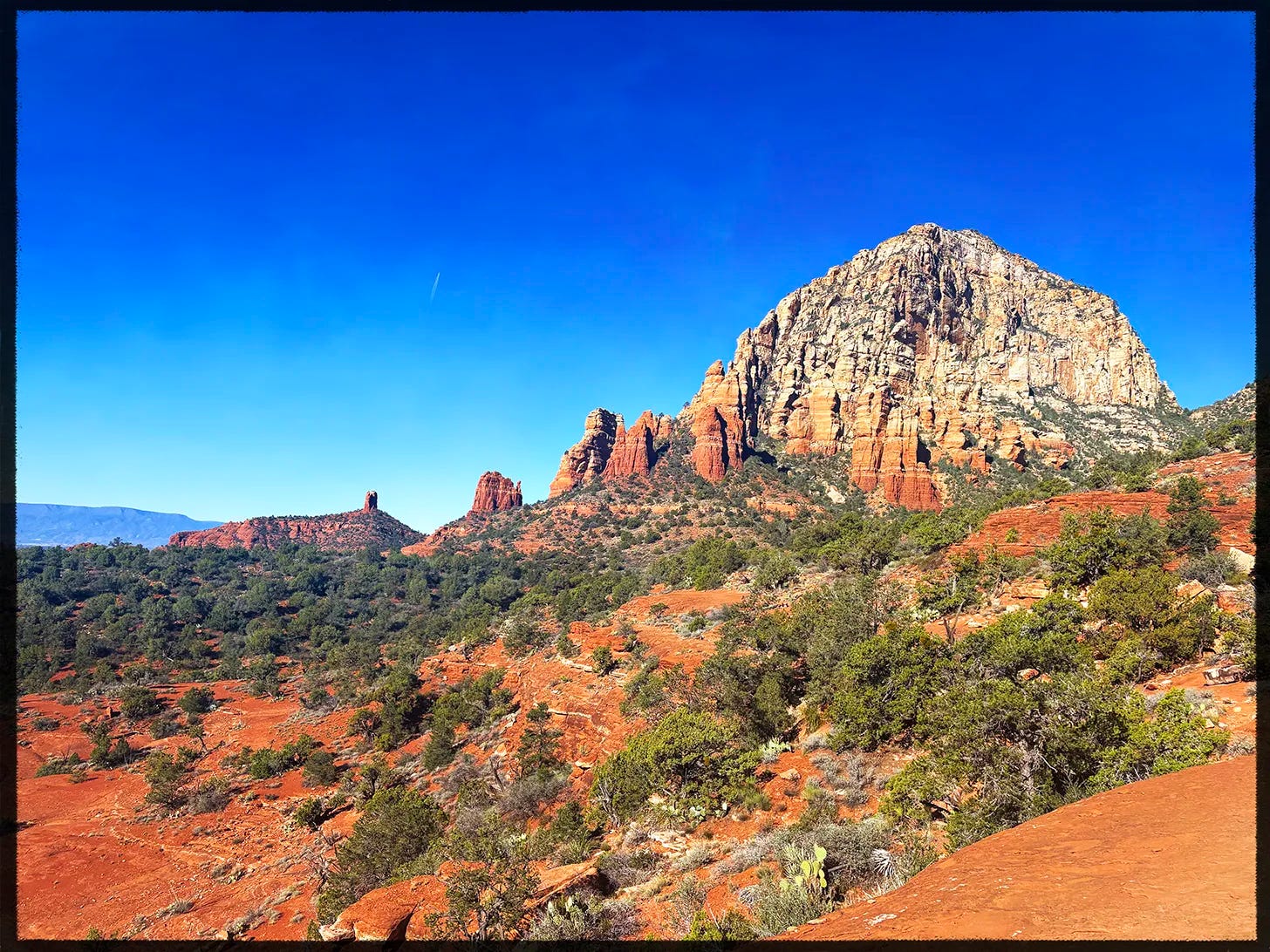
A large portion of the trail features panoramic views, though it’s worth noting a few semi-tricky climbs. Some of the debris can be slippery, and proper footwear will get you a long way.
The views make it all worth it, though, with an overlook of what feels like most of Sedona.
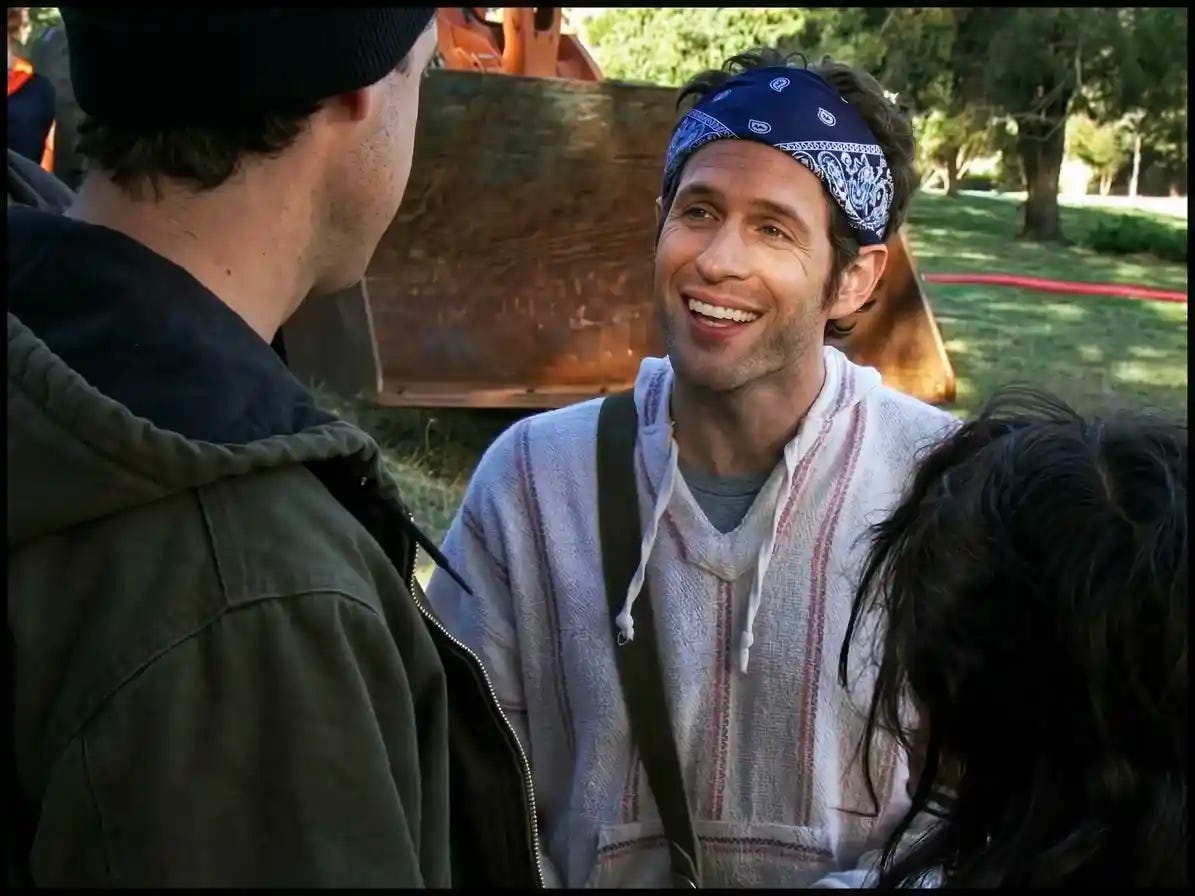
While on the way, check out the Rose Vortex Café. It does – not unexpectedly – have a hippie vibe, and some of the clientele looks to have taken that a bit too well to heart. A paisley-clad gentleman’s “I hope to see you on the path, sister” pickup line didn’t work too well with the barista, at least. Imagine Dennis in the third-season opener of It’s Always Sunny in Philadelphia, and you get the general idea.
The spot is located on 162 Coffee Pot Dr, and both their flat white and Island Green smoothie were good.



Crossing the bridge could easily take an hour during busy periods.
That sounds like my perfect Sedona trip so thanks in advance for the itinerary. And why have I not been bringing gummy bears?